There we were sitting at the table: five introverts with three extroverts. The two dynamic extroverts each positioned themselves at opposite ends of the table with the introverts and the older, quieter extrovert seated between them.
What happened? Everyone ate, enjoyed being together as a family, and the introverts listened as the extroverts carried on their piercingly loud conversation with each other from opposite ends of a long table. Supposedly, they were trying in include all of us in their conversation.
Were the introverts quiet because they just enjoyed listening and had nothing to say? As one of those quiet introverts, my answer is, "No". I would have liked to ask a few questions and talk with people that I haven't seen in nearly a year. Why didn't I? I tried to slip in a few words. I even tried to interrupt, but my words were drowned out by the extroverts' jubilant chatter.
Showing posts with label Communication. Show all posts
Showing posts with label Communication. Show all posts
Friday, November 23, 2018

Monday, February 19, 2018
How Do Feeling and Thinking Types See Life?
Of course, Feeling and Thinking personality types often have very different perspectives of what is most important in life and, consequently, very different goals. Though we must use both our Thinking and Feeling abilities to make wise decisions, people naturally prefer to use either Feeling values or Thinking logic to make most of their decisions.
Though it is tempting to simplify our differences and accept all the old stereotypes, Feelers decisions really are not "irrational" and Thinkers really are not "cold and unfeeling". Both Feeling and Thinking people make decisions rationally based on their values, and both types have strong feelings. Feelers generally do not verbalize their reasoning, and Thinkers generally do not physically express their feelings.
Though it is tempting to simplify our differences and accept all the old stereotypes, Feelers decisions really are not "irrational" and Thinkers really are not "cold and unfeeling". Both Feeling and Thinking people make decisions rationally based on their values, and both types have strong feelings. Feelers generally do not verbalize their reasoning, and Thinkers generally do not physically express their feelings.
How Can Thinkers and Feelers Communicate?
We've all experienced it with a spouse, acquaintance, or co-worker. There you are intelligent, responsible people meeting to try to provide information, give support, make a plan, or resolve a problem, when everything falls apart. The Feelers are hurt and angry, and may even walk away, leaving the confused Thinkers alone, wondering "What happened?".
What did happen? Is it that the Feelers were "too emotional", or were the Thinkers "too cold and unfeeling"? Actually, neither are wrong in how they approach life. A Feeler focuses on what is most important to people. A Thinker focuses more on logically completing tasks. Both perspectives are complementary and essential in making good decisions.
We run into trouble when Thinkers and Feelers don't understand each other. Interpreting the world from their own point of view, they often make incorrect assumptions. Because of this, they misinterpret the others' words and actions, assuming the worst. So what are some of the false assumptions that Feelers and Thinkers make when they try to communicate and work together?
What did happen? Is it that the Feelers were "too emotional", or were the Thinkers "too cold and unfeeling"? Actually, neither are wrong in how they approach life. A Feeler focuses on what is most important to people. A Thinker focuses more on logically completing tasks. Both perspectives are complementary and essential in making good decisions.
We run into trouble when Thinkers and Feelers don't understand each other. Interpreting the world from their own point of view, they often make incorrect assumptions. Because of this, they misinterpret the others' words and actions, assuming the worst. So what are some of the false assumptions that Feelers and Thinkers make when they try to communicate and work together?
What Can Thinkers DO to Better Communicate with Feelers?
You might be saying to yourself that it was nice to better understand how Feelers and Thinkers look at life, and it was even more helpful to have the false communication assumptions explained, but now what can I specifically DO to make communication better with a Feeler. Well, here it is!
Communicating with a Feeler - Do's and Don'ts
The main thing to remember when communicating with Feelers is that they are concerned with what is good for people.
The Ideal
Have a Positive Attitude toward the Feeler - A positive attitude is the basis of effective communication with a Feeler. Feelers "read" emotions. If you are annoyed with them, if you view them as inferior beings, if you don't respect their perspective, or value their goals, a Feeler will know. Your tone of voice and body language will broadcast your true thoughts. A Feeler will react not only to your words, but to the thoughts behind your words. You won't become a Feeler, but by simply making the effort to use a Feeling approach, your attitude will begin to change and your communication will improve. Feelers are very compassionate and will respond well to your efforts, even if they are less than perfect.
Communicating with a Feeler - Do's and Don'ts
The main thing to remember when communicating with Feelers is that they are concerned with what is good for people.
The Ideal
Have a Positive Attitude toward the Feeler - A positive attitude is the basis of effective communication with a Feeler. Feelers "read" emotions. If you are annoyed with them, if you view them as inferior beings, if you don't respect their perspective, or value their goals, a Feeler will know. Your tone of voice and body language will broadcast your true thoughts. A Feeler will react not only to your words, but to the thoughts behind your words. You won't become a Feeler, but by simply making the effort to use a Feeling approach, your attitude will begin to change and your communication will improve. Feelers are very compassionate and will respond well to your efforts, even if they are less than perfect.
What Can Feelers Do to Better Communicate with Thinkers?
We Feelers know that Thinkers need our personal perspective, but how can we communicate with people who are often demeaning, argumentative, aggressive, and arrogant? Many of us have bosses, co-workers, and husbands who are Thinkers. I know at moments it seems impossible, but there are things we can do. Here are my suggestions from my 68 years of living experience and 45 years of being married to a very strong Thinker.
First, we need to accept them as they are. They aren't going become Feelers anymore than we are going to become Thinkers. We can each move a little to the center, understand each other's motivation, and learn to speak their language - a little.
I'm not saying what we need to tolerate their rudeness, just that we need to accept that they are clueless. We attribute our rich perception of emotion to them and see all sorts of emotions behind their behavior and it simply isn't there. Thinkers don't even understand what we are talking about.
First, we need to accept them as they are. They aren't going become Feelers anymore than we are going to become Thinkers. We can each move a little to the center, understand each other's motivation, and learn to speak their language - a little.
I'm not saying what we need to tolerate their rudeness, just that we need to accept that they are clueless. We attribute our rich perception of emotion to them and see all sorts of emotions behind their behavior and it simply isn't there. Thinkers don't even understand what we are talking about.
Examples of Thinker and Feeler Communication
We needed to choose paint for the walls in our home. My husband (a Thinker) considered the coverage and cost of the paint. As a Feeler, I considered the affect the paint would have on my allergies. We ended up choosing a paint with adequate coverage but at a higher price, because it would have little negative effect on my health.
My supervisor stated that we were causing another worker, who gave us a ride each day, to be late for work. When we tried to explain, she (a Thinker) refused to listen, declaring that she didn't want to hear any "excuses". The other woman and I decided that we would show what was really happening. So we walked the couple of miles to work each day. The worker with the car was still late each day. It then became evident that she had been picking us up late.
A man (a well trained Thinker) called needing information. He jumped right into his question, then suddenly paused, and continuing in a softer less business tone of voice, asked me how I was doing before returning to his question.
My supervisor stated that we were causing another worker, who gave us a ride each day, to be late for work. When we tried to explain, she (a Thinker) refused to listen, declaring that she didn't want to hear any "excuses". The other woman and I decided that we would show what was really happening. So we walked the couple of miles to work each day. The worker with the car was still late each day. It then became evident that she had been picking us up late.
A man (a well trained Thinker) called needing information. He jumped right into his question, then suddenly paused, and continuing in a softer less business tone of voice, asked me how I was doing before returning to his question.
Sunday, October 22, 2017
ESFP - Enjoying Life!
Motivation
by a desire to freely enjoy life and amuse self- to be happy and satisfied
want to make a difference and do something meaningful
to help other people enjoy life too - find what things they need and things to do in the real world to increase their enjoyment of life; entertain them; motivate them to action
excited about the real world and want to engage others into enjoying it too
to have a wide variety of experiences
keep options open
to escape anxiety (fear about what might happen)
Characteristics
warm, charming, witty, friendly, genuine caring, generous, willing to help, lively, vivacious, eager, spontaneous, resilient, cheerful, practical, productive, free-spirited, fun-loving, energetic, animated, approachable, sensitive, idealistic (freedom), actively engage in life, honestly want others to be happy, sense of style (like arts) flare, love to learn, up and positive, observant,
by a desire to freely enjoy life and amuse self- to be happy and satisfied
want to make a difference and do something meaningful
to help other people enjoy life too - find what things they need and things to do in the real world to increase their enjoyment of life; entertain them; motivate them to action
excited about the real world and want to engage others into enjoying it too
to have a wide variety of experiences
keep options open
to escape anxiety (fear about what might happen)
Characteristics
warm, charming, witty, friendly, genuine caring, generous, willing to help, lively, vivacious, eager, spontaneous, resilient, cheerful, practical, productive, free-spirited, fun-loving, energetic, animated, approachable, sensitive, idealistic (freedom), actively engage in life, honestly want others to be happy, sense of style (like arts) flare, love to learn, up and positive, observant,
Wednesday, March 29, 2017
Needing Each Other
He needs predictability
I need opportunity
He needs order
I need flexibility
He needs routine
I need variety
He needs time to work
I need time to think
He needs a plan
I need follow through
He needs my enthusiasm
I need his calmness
We both need each other
I need opportunity
He needs order
I need flexibility
He needs routine
I need variety
I need time to think
He needs a plan
I need follow through
He needs my enthusiasm
I need his calmness
We both need each other
Monday, October 17, 2016
Marriage between Detailed and Creative people
I saw this video and it made me think of learning to "pull together" in marriage.
and pays bills "for us".
Allowing me the quiet time
I need to study and think,
so I can write "for us".
Forty-four years ago I never thought I would write something like this, but I just did. In fact, I wondered if our marriage ever work. We were miserable. He was always so critical of everything I did. I wanted him to be more relaxed, and have a little spontaneity. He never wanted anything to change, and that was what my life was about -- change. My credo was, "Why not?" and his was, "Why!". He was a firm believer in, "If it ain't broke, don't fix it!", while I longed to help everyone achieve their potential. My husband lived in constant fear of his "irresponsible, immature, incapable" partner who he tried, unsuccessfully, to keep in tight control. I grew increasingly resentful and angry toward this ISTJ (introverted sensing thinking judging) person who kept trying to "correct" me and who treated me like I was a child. I felt like I had red lines marked all over me. I definitely did not want to be made over into some "proper, orderly" person. If that is what he wanted, then why hadn't he married someone who was like that. I had been me. I hadn't pretended (like I could!) to be any one different. I was who I am-- a gifted creative person, an INFJ (introverted intuitive feeling judging) individual.
Well, how did we get from that dismal point to where we are now? Mainly, with a lot of prayer. I'm not kidding. It took help beyond our own for us both to appreciate the other's strengths.
Saturday, May 23, 2015
Poems Instead of Casseroles - Intuitives in a Busy World
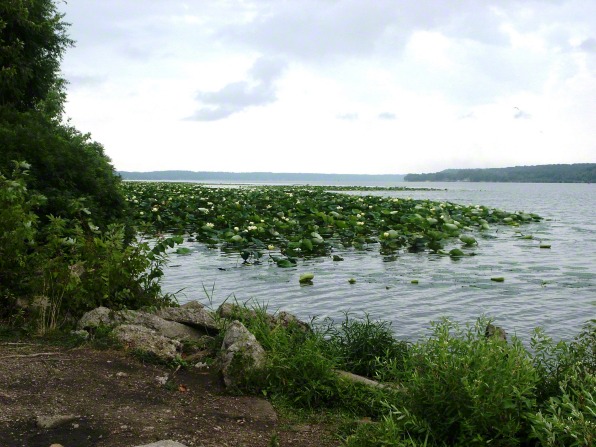 How does a creative intuitive person (I'm a INFJ) fit into the busy orderly world out there? We don't. We just sort of slip out of the main stream and make our own quiet little eddie. It's a great place. There is time to think, feel, enjoy life, and time to create beauty.
From my quiet spot, I watch others whizzing by. Though appreciating their accomplishments, I have no desire to be a part of this madly rushing main stream. Does this mean I have nothing to do with other people? How does a creative person still be a part of their society?
Friday, May 22, 2015
Happily Married for 43 Years - INFJ and ISTJ
I have been thinking about this talk on the Renaissance of Marriage by President Eyring about how to make a happy marriage. I love this humourous video, Lasting Marriage, on having a long happy marriage.I means a lot to me because my husband and I are very different.
My husband is a person who is always engaged doing something, such as his handyman business. He deals with the real world and likes to follow patterns that have worked well in the past. He does things with exactness. He is a quiet thoughtful person and so am I. The big difference is that my thoughts are racing at top speed. I leap from thought to thought. I love to study and think about ideas. I like to see patterns in behavior and help people reach their potential (I'm a natural teacher). I live mainly in the world of thought and future possibilities. So how have a hands-on builder and a head-in-the-clouds philosopher been happily married for 43 years?
The INFJ in the "Real World"
Yes, I am a dominant intutive. I live in the world of imagination and love it there. It's a fun place where I can explore ideas. It is where I sift through all the data that my extroverted feeling and sensing functions have been sending me and make sense of it. As I ponder people and situations, I see in my mind what future consequences might be. Not only do I live in a world of imagination, but in a world of possibilities.
Many creative people (ENFJ, INFP, ENFJ) create wonderful music, art, writing, and inventions. INFJs can do these things, but our focus is generally more on improving the world, especially helping people to become better. As you can imagine, the person waving the flag and calling for everyone to come up, to change for the better, is not always appreciated in our "reality" world. Don't I know that it can't be done? Don't I know that people just are the way they are? No, I don't!
Think of these famous INFJ's : Mahatma Gandhi, Thomas Jefferson, Eleanor Roosevelt, Nelson Mandela, and Mother Teresa. INFJ's are not just idealistic dreamers, we are people who use our thinking ability to help analize the whole picture and our judging ability to make a plan to achieve the goals we know are possible. We are the practical dreamers; the teachers, social reformers, and counselors of the world. Our drive is to heal and help. Where is my flag? I feel like waving it!
Many creative people (ENFJ, INFP, ENFJ) create wonderful music, art, writing, and inventions. INFJs can do these things, but our focus is generally more on improving the world, especially helping people to become better. As you can imagine, the person waving the flag and calling for everyone to come up, to change for the better, is not always appreciated in our "reality" world. Don't I know that it can't be done? Don't I know that people just are the way they are? No, I don't!
Think of these famous INFJ's : Mahatma Gandhi, Thomas Jefferson, Eleanor Roosevelt, Nelson Mandela, and Mother Teresa. INFJ's are not just idealistic dreamers, we are people who use our thinking ability to help analize the whole picture and our judging ability to make a plan to achieve the goals we know are possible. We are the practical dreamers; the teachers, social reformers, and counselors of the world. Our drive is to heal and help. Where is my flag? I feel like waving it!
Subscribe to:
Posts (Atom)